


Self-custody and exchange custody
Bitcoin held on an exchange is a claim on that exchange. The owner does not control the coins directly. However, if a hacker drains the platform, or it freezes withdrawals or goes bankrupt, customers wait in line with other creditors.
That wait can last years. Mt. Gox collapsed in 2014, and its creditors only began receiving repayments in July 2024. Similarly, FTX filed for bankruptcy in November 2022 and froze customer funds.
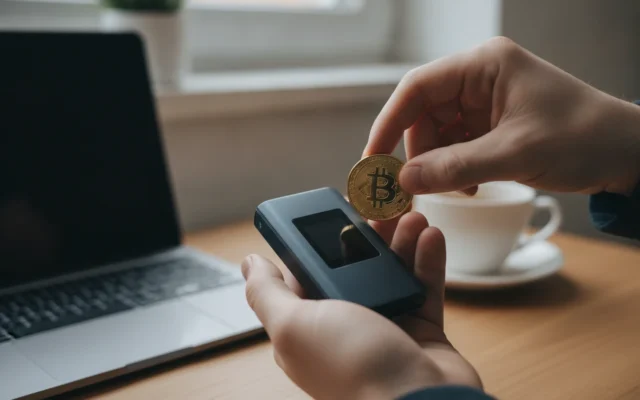
Self-custody removes that risk. The owner keeps the private keys in their own wallet, usually a hardware wallet that never exposes the keys to an internet-connected computer. The trade-off is responsibility: nobody can recover the funds if the backup is lost. Bitcoin wallets explained compares the main options and the situations each one suits.
Seed phrases and backups
Almost every modern wallet creates a recovery phrase of 12 or 24 words when it is first set up. Whoever holds those words controls the coins, because anyone with the phrase can rebuild the wallet on any device and move the funds.
As a result, no wallet maker, exchange or support agent ever has a legitimate reason to ask for it. Write the phrase down on paper and keep it offline. Never photograph it, type it into a website or save it in cloud notes. Store it somewhere safe from fire and water. For that reason, many long-term holders stamp the words onto a metal plate.
Some wallets also support an optional passphrase, which adds a second factor on top of the words. The Bitcoin.org guide to securing a wallet covers the same principles in more detail.
Scams to watch for
Most Bitcoin theft does not involve breaking any cryptography. Instead, scammers persuade the owner to hand over access or send coins willingly. These patterns account for a large share of reported cases:
- Fake support accounts on social media or Telegram that ask for a seed phrase to “fix” a wallet problem
- Giveaways that promise to send back double any bitcoin sent to an address
- Counterfeit wallet apps in app stores and browser extension marketplaces
- Malware that swaps a copied wallet address for the attacker’s own
- Investment platforms promising fixed daily or weekly returns
However, two habits stop most of these. First, check the receiving address on the hardware wallet’s own screen before confirming, not just on the computer. Second, send a small test amount before moving a large balance. The beginner’s Bitcoin checklist and safe crypto trading habits build both into a routine.
Frequently asked questions
Can a Bitcoin transaction be reversed?
No. Once a transaction is confirmed on the blockchain, no bank, network operator or support desk can cancel it. The only way to get coins back is for the person who received them to return them voluntarily.
What happens if a hardware wallet is lost or breaks?
The device does not hold the bitcoin itself. The blockchain records the coins, and the device only holds the keys that control them. Entering the recovery phrase into a new compatible wallet restores full access. However, if the phrase is lost as well, nobody can recover the funds.
Is a hardware wallet necessary for small amounts?
Not always. A well-known mobile wallet with a backed-up recovery phrase is a reasonable choice for small, everyday amounts. A hardware wallet makes more sense once losing the balance would cause real financial harm. It also suits coins held for the long term.
Where can a Bitcoin scam be reported?
Report it to the platform where the scam appeared and to the exchange the coins were sent from. Then file a report with the national fraud service, such as the FBI’s Internet Crime Complaint Center in the US or Action Fraud in the UK. Anyone offering to recover stolen bitcoin for an upfront fee is almost always running a second scam.